INDUSTRY LEADERS
0

Confined Space Entry Training

Initial Course. 1 Day - Only $239! Our site or yours.

Confined Space Entry Training Brisbane, Gold Coast and Onsite

Undertaking and successfully completing this course will provide students with the following three units of competency:

  • RIIWHS202E Enter and work in confined spaces
  • MSMPER205 Enter confined space
  • MSMPER200 Work in accordance with an issued permit

Confined Space Entry (CSE1)

The OHSA Confined Space Entry Course (CSE1) is a foundational safety program designed for personnel required to perform risk assessments and work within or around confined space environments. This course is strongly recommended prior to booking into our Gas Testing and Permit Issuer Course (CSE2).

NATIONALLY RECOGNISED UNITS OF COMPETENCY

This training provides a Statement of Attainment for three core Australian units of competency:

  • RIIWHS202E: Enter and work in confined spaces.
  • MSMPER205: Enter confined space.
  • MSMPER200: Work in accordance with an issued permit.

FLEXIBLE TRAINING DELIVERY

We provide high-fidelity practical training tailored to industrial, mining, and construction environments across two primary formats:

  1. Campus-Based Training: Held at our specialised training centres in Brisbane and the Gold Coast.
  2. On-Site Training: We can deploy our training directly to your workplace. This allows us to customise practical scenarios to your specific site risks, equipment, and company safety protocols.

WHO SHOULD ATTEND?

This course is essential for workers, supervisors, and safety officers in industries requiring compliance with AS2865-2009 standards. Participants will gain the skills to identify hazards, implement control measures, and safely execute work under an issued permit.

OHSA Confined Space Entry Training

This course is designed for personnel across diverse industries who are required to enter, work in, or maintain a presence near confined spaces. It is particularly relevant for those operating under the Work Health and Safety (WHS) Regulation and Australian Standard AS2865.

TARGET PROFESSIONAL ROLES

This course is essential for individuals in the following roles:

  • Trades & Maintenance: Plumbers, electricians, and mechanical fitters working in pits, tanks, or shafts.
  • Civil Construction Workers: Personnel involved in trenching, pipe-laying, or tunnel maintenance.
  • Industrial Cleaners: Workers managing waste removal or chemical storage tank cleaning.
  • Safety Supervisors: Individuals responsible for overseeing risk assessments and permit compliance on-site.
  • Standby Persons: Those tasked with monitoring entrants and initiating emergency communication protocols.

PRIMARY INDUSTRY SECTORS

Our training is tailored to meet the rigorous safety standards of:

  • Mining & Resources: Surface and underground operations.
  • Water & Utilities: Sewerage, drainage, and water treatment plant maintenance.
  • Oil & Gas: Refinery maintenance and storage vessel inspections.
  • Manufacturing: Vats, silos, and pressure vessel work.
  • Telecommunications: Accessing underground cabling and equipment vaults.

COMPLIANCE & CAREER PATHWAYS

  • Mandatory Requirement: This is the entry-level qualification for anyone requiring a “Confined Space Ticket” for site access in Australia. See course prerequisites below for course requirements.
  • Prerequisite for Advancement: Completion of this course is strongly encouraged before booking into our Gas Testing (MSMWHS217)Permit Issuer (MSMPER300) course.

Course Curriculum & Learning Outcomes

This course provides the theoretical knowledge and practical proficiency required to work safely in high-risk environments. Training is delivered in strict accordance with the Work Health and Safety (WHS) Act 2011 and Australian Standard AS2865-2009.

DEFINING A CONFINED SPACE

Per Safe Work Australia’s Code of Practice, we train participants to identify enclosed or partially enclosed spaces that are not intended for primary occupation and pose risks such as:

  • Atmospheric Hazards: Unsafe oxygen levels or harmful concentrations of airborne contaminants (gases, vapours, and dust).
  • Physical Risks: Risks of fire, explosion, or engulfment.
  • Common Examples: Pits, tanks, process vessels, boilers, silos, sewers, shafts, and shipboard void spaces.

CORE LEARNING OBJECTIVES

Upon successful completion of the CSE1 program, participants will be able to:

  • Identify & Classify: Determine what constitutes a confined space based on statutory definitions and site-specific profiles.
  • Risk Assessment: Complete a Job Safety Environmental Analysis (JSEA) to mitigate atmospheric, biological, and physical hazards.
  • Hierarchy of Controls: Implement safety measures, including isolation, ventilation (purging), and administrative safeguards.
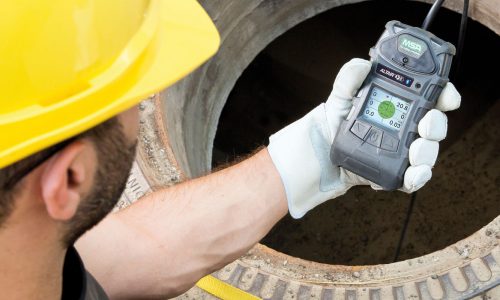
  • Atmospheric Monitoring: Interpret gas detector readings for O2 (Oxygen), CO (Carbon Monoxide), H2S (Hydrogen Sulphide), and LEL (Lower Explosive Limits).
  • Permit & Role Compliance: Operate strictly under an issued Confined Space Entry Permit and fulfil the legal duties of a Standby Person.

PRACTICAL SKILLS & SCENARIO TRAINING

Training is conducted in a controlled, high-fidelity environment where students must demonstrate:

  • Equipment Mastery: Correct inspection and donning of full-body harnesses, lanyards, and mechanical retrieval systems (tripods/winches).
  • Communication: Effective use of hand signals, radios, and “whistle codes” between the entrant and the Standby Person.
  • Emergency Response: Executing self-rescue techniques and initiating emergency communication protocols and sirens.

NATIONALLY RECOGNISED CERTIFICATION

Successful participants will receive a Statement of Attainment for the following units, essential for the Australian resources, utilities, and infrastructure sectors:

  • RIIWHS202E – Enter and work in confined spaces
  • MSMPER205 – Enter confined space
  • MSMPER200 – Work in accordance with an issued permit

Prerequisites & Entry Requirements

To ensure compliance with National Training Standards and the safety of all participants, the following requirements must be met before attending the Confined Space Entry (CSE1) course.

PHYSICAL & PSYCHOLOGICAL CAPABILITY

Participants must be physically and mentally fit to perform high-intensity, practical scenario-based training. Activities include:

  • Mobility & Agility: Crawling and climbing up, down, through, or under restricted structures and confined spaces.
  • Working at Height: Being temporarily suspended and lowered into a confined space simulator in a harness and wearing specialised PPE.
  • Strength & Endurance: Lifting and carrying breathing apparatus cylinders; dragging or carrying people (or mannequins) in rescue scenarios.
  • Environmental Stress: Operating in dark, low-light, or smoke-filled environments.
  • Health Considerations: This course is not recommended for individuals with severe claustrophobia (fear of confined spaces) or physical limitations that prevent heavy lifting or climbing.

AGE & IDENTIFICATION

  • Age Requirement: Participants must be 18 years or older to enrol in any of our safety training programs.
  • OHSA does not provide training for individuals under the age of 18.
  • Identification: You must present a valid government-issued photo ID (e.g., Driver’s License).
  • USI: A valid Unique Student Identifier (USI) is mandatory for your Statement of Attainment to be issued.

VISA STATUS

Students must not be on a student visa or be the partner of someone on a student visa.

LANGUAGE, LITERACY & NUMERACY (LLN)

Safe operation in a confined space requires clear communication. Students must have sufficient literacy and numeracy skills to:

  • Read and comprehend complex safety instructions and permits.
  • Interpret gas monitor readings and atmospheric data.
  • Document risk assessments and site-specific safety reports.

EQUIPMENT & PERSONAL PROTECTIVE EQUIPMENT (PPE)

  • Standard PPE is mandatory: You must wear a sleeved shirt, pants (short or long) and enclosed safety footwear (steel-capped boots recommended).
  • Equipment Policy: *OHSA will provide all specialised equipment necessary for your training.

FITNESS FOR DUTY & CLASSROOM POLICY

Safety starts in the classroom. No student will be permitted to undertake the course or any session if they are impaired. This includes being under the influence of alcohol, illegal/illicit substances, or experiencing impairment from prescribed medication, or severe fatigue.

Need assistance? If you have questions regarding your physical suitability or equipment compliance, contact our team on 1300 647 200.

Frequently Asked Questions (FAQ)

  • How long does a Confined Space Ticket last in Australia? While a nationally recognised Statement of Attainment (RIIWHS202E) does not technically expire, industry best practice and Australian Standard AS2865-2009 recommend refresher training every 2 years. Most major worksites in mining and construction will not accept a ticket older than 24 months.
  • What is the difference between CSE1 and CSE2 courses?

CSE1 (Initial): Focuses on safe entry, risk assessment, and working within the space.
CSE2 (Advanced): This is a follow-on course for those who need to operate electronic gas detectors (Gas Testing) and legally issue work permits (Permit Issuer).

  • Do I need a White Card to do Confined Space training? No, a White Card (General Construction Induction) is not a formal prerequisite for the CSE1 course. However, if you intend to use your Confined Space ticket on an active construction site, you will almost certainly be required to hold a valid White Card for site access.
  • What is an “unsafe level” of oxygen in a confined space? Under AS2865, a safe oxygen range is between 19.5% and 23.5%. Anything below 19.5% is considered oxygen-deficient (asphyxiation risk), and anything above 23.5% is oxygen-enriched (significant fire and explosion risk).
  • Is this course nationally recognised? Yes. Upon successful completion, you will receive a Statement of Attainment for three units outlined under ‘competency elements’ above.  These units are part of the Australian Qualifications Framework (AQF) and are recognised by employers across all states and territories.
  • What happens if I am claustrophobic? Confined space training involves practical scenarios in restricted, dark, or low-light environments. If you suffer from severe claustrophobia, you may find the practical assessment challenging. We recommend discussing your concerns with our administration team prior to your course.
  • Can OHSA conduct training at my specific worksite? Yes. We can bring our purpose-built mobile training facility to your location in Brisbane, the Gold Coast, or regional areas. This allows us to tailor the practical rescue and entry drills to the specific tanks, pits, or vessels your team uses daily.

Confined Space Entry

Study

Option

Face-to-face

Maximum

Students

12

Duration

1 day
8am - 4:30pm

Locations

Brisbane
Gold Coast

Price

$239.00

CORPORATE ACCOUNTS

Sign up for a Corporate Account and receive great discounts and other benefits

REGISTER NOW

COURSE DATES AND LOCATIONS

View courses by location:

View as:

List

Location Date Time Price Make a Booking
Gold Coast 24 Aug - 24 Aug 2026 8:00 am - 4:30 pm $239.00 ADD TO CART
Gold Coast 21 Sep - 21 Sep 2026 8:00 am - 4:30 pm $239.00 ADD TO CART
Brisbane 08 Oct - 08 Oct 2026 8:00 am - 4:30 pm $239.00 ADD TO CART
Gold Coast 19 Oct - 19 Oct 2026 8:00 am - 4:30 pm $239.00 ADD TO CART
Brisbane 05 Nov - 05 Nov 2026 8:00 am - 4:30 pm $239.00 ADD TO CART
Gold Coast 16 Nov - 16 Nov 2026 8:00 am - 4:30 pm $239.00 ADD TO CART
Brisbane 03 Dec - 03 Dec 2026 8:00 am - 4:30 pm $239.00 ADD TO CART
Gold Coast 14 Dec - 14 Dec 2026 8:00 am - 4:30 pm $239.00 ADD TO CART
Email Quote

Separate multiple addresses by comma