INDUSTRY LEADERS
0

Pathway to Construction | White Card, HSR & WHS Courses

1.1 Million Australians work in Construction with an Average Salary $81,568 - Maybe time for a career change?

Construction Career Pathway – OHSA Australia

The Construction career pathway at OHSA provides a clear roadmap for entering and advancing in Australia’s building and construction industry. With over 1.1 million workers and more than 70 career opportunities nationwide, the sector offers rewarding jobs, competitive salaries, and clear progression routes. Whether you are starting your first site role or upskilling for leadership positions, this pathway details the essential training, licences, competencies, and recommended courses to help you succeed.

WHY CHOOSE OHSA FOR CONSTRUCTION CAREER PATHWAYS?

OHSA’s construction pathway is practical, compliance-focused, and fully aligned with the Work Health and Safety Regulation 2011. Our courses equip you with the knowledge, skills, and nationally recognised credentials that employers across Queensland and Australia demand. Completing the recommended courses and certifications allows you to progress from entry-level construction roles to supervisory and leadership positions, boosting your career prospects, skills, and earning potential.

CONSTRUCTION CAREER PATHWAYS FAQS

  • Do I need a White Card to work in construction?
    Yes. You must hold a White Card (General Construction Induction) before entering any construction site in Australia. This training is a legal requirement and confirms you understand basic site safety practices and WHS obligations.
  • Can a Health & Safety Representative (HSR) progress to a WHS Safety Advisor role?
    Yes. An HSR can progress into a WHS Safety Advisor role by completing a Certificate IV in Work Health and Safety (WHS) and gaining relevant on-site experience in safety systems, risk management, and compliance.
  • Do all construction workers need a High Risk Work Licence?
    No. You only need a High Risk Work Licence if you perform specific high-risk activities, such as operating cranes, forklifts, hoists, or scaffolding, as defined under Australian WHS legislation.

Construction Worker – Entry Level

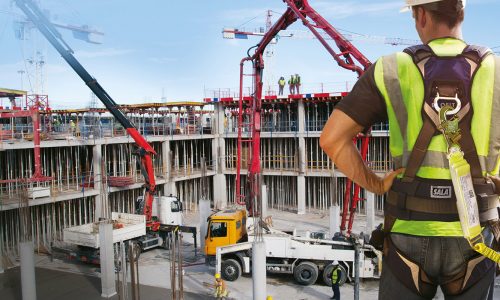
General Construction Induction training (commonly known as the White Card) is a mandatory requirement for persons seeking to work in construction workplaces. S. 317 of the Work Health and Safety Regulation 2011 requires that an employer not direct or allow a worker to carry out construction work unless that worker has successfully completed General Construction Induction training (White Card), and if their White Card is more than 2 years old, that worker has worked in construction in the past 2 years. Maximum penalty—$4,240 fine! Due to this, many employers are now requiring that all White Cards be no older than 2 years!

Obviously, there are many other courses you could take, but before you start spending money, you might want to speak to others in the job/industry you are hoping to work in. Your new employer might actually pay for you to do these courses! Obviously, having more qualifications will give you an advantage over other people chasing that same job.

REQUIRED TRAINING

  • White Card (General Construction Induction) – mandatory for all construction sites in Australia.

Site-specific inductions as required by employers.

RECOMMENDED COURSES

CAREER OUTCOMES

  • Construction Labourer
  • Apprentice Tradesperson
  • Site Operator

FAQS

  • Can I work on high-risk sites with just a White Card?
    No, high-risk work requires additional licences and training.

Required Courses

WHS Representative (Health & Safety Rep)

According to Section 21 of the Work Health and Safety Regulation 2011, the employer must send their HSRs to an accredited 5-Day Health and Safety Representative Course within 6 months of being elected. HSRs also need to undergo 1-Day Refresher training at least every three years. The employer must also pay for the course and associated other fees and pay the workers’ wages to attend the training.


REQUIRED TRAINING

  • HSR Representative Course (5 Days) – Government-approved course for elected workplace safety representatives.
  • HSR Refresher – for ongoing competence every 12–24 months.

RECOMMENDED COURSES

  • Basic Risk Assessment
  • Site Safety Communication Skills
  • Incident Investigation Fundamentals

FAQS

  • How long is an HSR term?
    Typically 2–3 years, depending on workplace election procedures.
  • Can an HSR work across multiple sites?
    Yes, if authorised by their employer or site safety management.

WHS Safety Advisor

There is no specific mandated course/qualification that a WHS Safety Advisor / Safety Co-ordinator / Safety Officer must hold.  The industry has generally settled on Certificate IV Work Health and Safety as the entry point qualification. Some employers are additionally requesting that any prospective candidate hold a Diploma in WHS. Obviously, you want your CV to look as good as possible when competing against other candidates, and you might consider adding other relevant qualifications, including Rehabilitation, First Aid, Incident Investigation, Training & Assessing and Hazard Specific Courses.

REQUIRED TRAINING

  • Certificate IV in Work Health & Safety – minimum qualification to provide workplace safety advice.

Experience in workplace safety programs (recommended).

RECOMMENDED COURSES

  • ICAM Lead Incident Investigation
  • Risk Assessment & Control
  • Return-to-Work Coordination
  • Advanced Safety Leadership

FAQS

  • Is a Certificate IV WHS mandatory to become a WHS Advisor?
    Most employers require it as a minimum, along with practical safety experience.
  • Can I transition from a WHS Representative to a WHS Advisor?
    Yes, completing a Certificate IV and gaining experience can lead to career progression.

Operator / High Risk Licence Worker

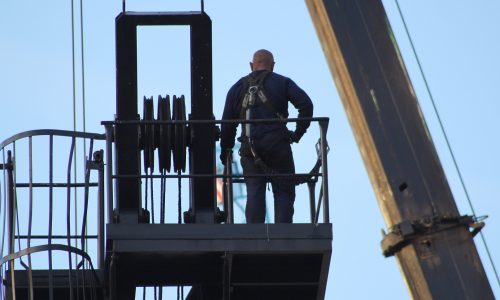
Almost every job in construction requires a worker to operate a forklift, work from an EWP, erect some scaffolding or lift and move a load. With a High Risk Work Licence, you give yourself a real advantage over the next applicant for that job. Most of these courses involve 3-5 days of training and assessment to get your ticket (licence). Many of the courses attract significant funding from various industry groups due to the recognised need to skill our workforce. We are able to train you at our facility, or we can attend your site and train you with your own plant and equipment.

REQUIRED TRAINING

  • High Risk Work Licence (HRWL) – specific to your role (e.g., Forklift, Crane, Dogging, Rigging).
  • White Card (mandatory for site access).

RECOMMENDED COURSES

  • Site Risk Awareness
  • Confined Space and Elevated Work Training
  • Supervisory Safety Skills (if progressing to team leader)

FAQS

  • Do all construction operators need a High Risk Licence?
    Only for specific high-risk activities defined by Australian WHS legislation.

Mining Career Pathway

mining safety career pathway prepares workers to enter, operate safely, and progress into leadership roles within surface and underground mining environments.

ENTRY-LEVEL MINING REQUIREMENTS

Most mining roles require completion of:

This is mandatory for working in Queensland coal mining environments.

INTERMEDIATE & ADVANCED MINING ROLES

Once on site, workers may progress into roles requiring:

Common progression:
Mining Worker → Supervisor → Safety-Focused Leadership Roles

OHSA’s mining pathway supports both new entrants and experienced workers seeking compliance or advancement.

MINING PATHWAYS FAQS

  • Do I need Standard 11 for all mining jobs?
    Yes, Standard 11 is mandatory for Queensland coal mining roles.
  • Can I move into safety roles from mining?
    Yes. Many mining professionals transition into WHS or safety advisor roles with additional training.
See pathways and courses
ohsa-pathways-mining-career-australia
Email Quote

Separate multiple addresses by comma